

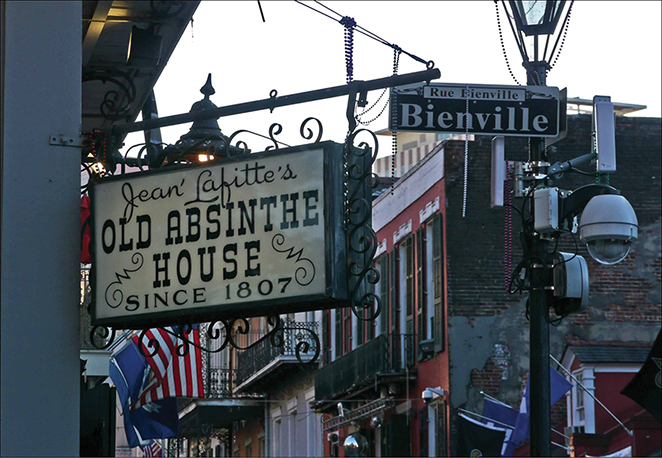
The Old Absinthe House
Courtesy of Stuart J. Fischer, MD, FAAOS
Published 11/20/2025
|
Stuart J. Fischer, MD, FAAOS
AAOS returns to New Orleans in March 2026 for its 12th Annual Meeting held in the Crescent City. It is a great educational experience and a fun place to have a meeting. So “laissez les bon temps rouler” — let the good times roll!
The Annual Meeting will be held at the Ernest N. Morial Convention Center, named in honor of the city’s first Black mayor. The center is close to everything that makes New Orleans fun. With more than 1 million square feet of exhibit space, it is the sixth largest convention facility in the United States. The convention center sits right on the Mississippi River, on a bend in the river that gives the city its moniker “the Crescent City.”
The Old Absinthe House
Courtesy of Stuart J. Fischer, MD, FAAOS
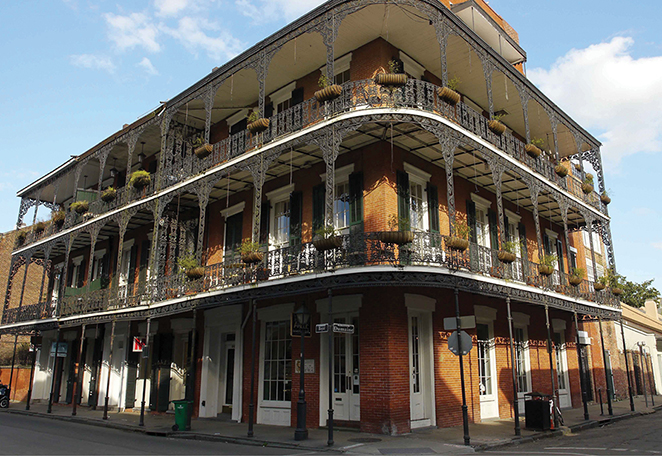
French Quarter architecture in the Miltenberger Houses
Courtesy of Stuart J. Fischer, MD, FAAOS
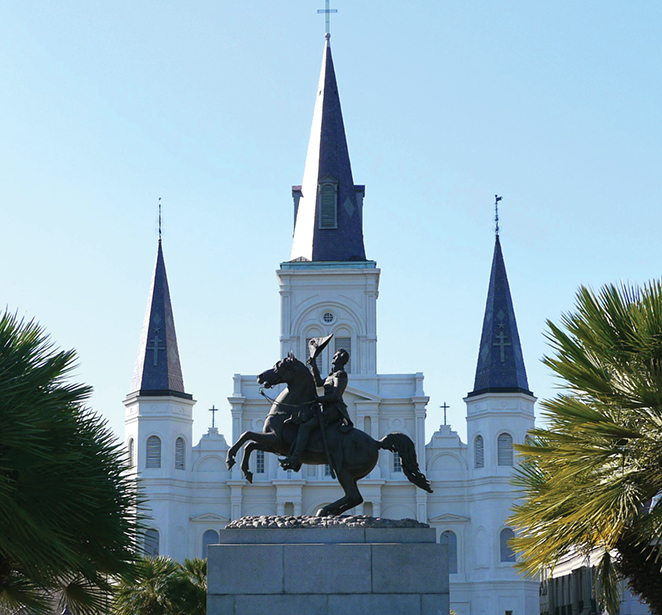
St. Louis Cathedral in Jackson Square
Courtesy of Stuart J. Fischer, MD, FAAOS
New Orleans is also known as “the Big Easy,” but the origins of that name are not clear. Many credit Betty Guillard, a New Orleans gossip columnist, who used the term to compare the freewheeling lifestyle of the city to New York’s “Big Apple.”
Although Bourbon Street was not named for distilled Kentucky whiskey, some drinks have a long association with New Orleans. The most famous is absinthe, also known as “la fée verte” or “the green fairy,” which was illegal in the United States from 1912 to 2007 because it was thought to have hallucinogenic properties. The Old Absinthe House at the corner of Bourbon and Bienville dates back to 1806. According to legend, General Andrew Jackson met the privateer Jean Lafitte in the “secret room” to negotiate for Lafitte’s support in the Battle of New Orleans.
New Orleans is also known for its “official cocktail,” the Sazerac. Famously served at the Sazerac Bar in the Roosevelt Hotel, the drink was first concocted from bitters made by a Creole apothecary named Antoine Peychaud and combined with Sazerac cognac from France. Over time, the ingredients evolved, with rye taking the place of cognac and his bitters replacing absinthe.
New Orleans offers more for the taste buds than just drinks and is the home of many unique dishes, including:
- Etouffee: A classic Cajun stew made with seafood or chicken; the Cajun “holy trinity” of onions, bell peppers, and celery; and a thick sauce or roux, served over rice
- Gumbo: A Creole dish made with a dark roux, seafood, chicken, sausage, and the “holy trinity,” served over rice
- Muffaletta: A sandwich from Central Grocery on Decatur Street made from a round loaf of bread with meat, cheese, and an olive salad
- Bananas Foster: A dessert, often flambéed, featuring bananas cooked in a buttery sauce of rum, brown sugar, cinnamon, served over ice cream
- Beignets: A deep-fried dough pastry from Café du Monde covered with powdered sugar, often served with coffee made from ground chicory beans
- Oysters Rockefeller: Baked oysters topped with a green vegetable-herb puree mixed with Pernod or Herbsaint liqueur — invented at Antoine’s on St. Louis Street, the oldest continuously run family restaurant in the United States
- Po’ boy: a French-bread sandwich stuffed with seafood, lettuce, tomato, and mustard, whose name dates back to a streetcar workers’ strike in the 1920s when grocers served free sandwiches to the strikers, who they called “poor boys”
Must-see sights
New Orleans has 194 properties listed on the National Register of Historic Places, including 24 National Historic Landmarks and 21 National Historic Districts.
New Orleans architecture reflects Spanish, French, and Caribbean influences. With a curved façade, floor-to-ceiling windows, wrought iron galleries, and overhanging flower baskets, the Miltenberger Houses appear in just about every guidebook of New Orleans as an example of French Quarter architecture.
The best-known architectural landmark in New Orleans is St. Louis Cathedral, whose three spires overlook Jackson Square and the Mississippi River. Built in 1727 to honor King Louis IX of France, it is the oldest continuously operating Catholic cathedral in the United States and has been rebuilt twice since that time.
Jackson Square is home to the famous statue of Andrew Jackson on horseback commemorating his victory in the Battle of New Orleans. The statue was erected in 1856 and is the first equestrian statue to have more than one unsupported leg.
Because New Orleans sits on a river, some parts are five to 10 feet below sea level. For this reason, the dead are often buried above ground in stone tombs or mausoleums. New Orleans cemeteries are sometimes called “Cities of the Dead.” St. Louis Cemetery No. 1, close to the French Quarter, is the resting place of famed Voodoo priestess and community activist Marie Laveau. Voodoo, which is a practice derived from a mixture of African and Caribbean traditions, was an integral part of life in 19th-century New Orleans. Many still visit Laveau’s tomb, bringing gifts in hopes that her spirit can still perform its magic.
Streetcars are an iconic way to get around New Orleans. Perhaps the most well-known is “a Streetcar Named Desire,” from Tennessee Williams’ 1947 play of the same name. The Desire line no longer operates, but visitors can still catch the historic St. Charles streetcar. This dark green vintage streetcar is the oldest continuously operating streetcar in the world and runs along a scenic six-mile route that includes the Garden District, Tulane University, and Audubon Park.
Jazz and blues in the Big Easy
African influence helped New Orleans become known as the birthplace of jazz. Over the years, many well-known jazz artists have come from New Orleans, including Sidney Bechet; Jelly Roll Morton; Fats Domino; Pete Fountain; Al Hirt; and Ellis, Wynton, and Branford Marsalis. The most famous, of course, is Louis Armstrong, also known as “Pops” or “Satchmo.”
Preservation Hall features live jazz 360 nights a year. Another hot spot for catching jazz, reggae, and blues is Frenchmen Street — considered one of the best streets for finding live music in New Orleans.
Members can eat, drink, and enjoy music in New Orleans and still be ready for a committee meeting or instructional course early the next morning. So go to the meeting, catch up with old friends, learn about the latest in orthopaedics, and have a fun time in the Crescent City.
Laissez les bon temps rouler!
Stuart J. Fischer, MD, FAAOS, is an orthopaedic surgeon in private practice in Watchung, New Jersey. He also serves on the AAOS Committee on Ethics and Outside Interests, the Hip Program Committee, and the Digital Health Task Force. Dr. Fischer is a member of the AAOS Now Editorial Board.