
Robotic-assisted Lateral Unicompartmental Knee Arthroplasty: Surgical Technique and Considerations
Introduction: Lateral unicompartmental knee arthroplasty (UKA) is a viable treatment for isolated lateral compartment osteoarthritis. Recent advancements in surgical technology have introduced robotic assistance, which may improve precision and outcomes. This video abstract presents a case demonstrating the surgical technique and discusses the supporting literature comparing robotic-assisted to conventional methods for lateral UKA surgery.
Case Presentation: We present the case of a 77-year-old female with a history of right total hip arthroplasty, who presented with right knee pain refractory to conservative management. Radiographic evaluation revealed valgus alignment and end-stage osteoarthritis of the lateral compartment with preserved medial and patellofemoral compartments. The patient underwent a right robotic-assisted lateral UKA using the JOURNEY II system. The procedure utilized a midline incision and a lateral parapatellar arthrotomy.
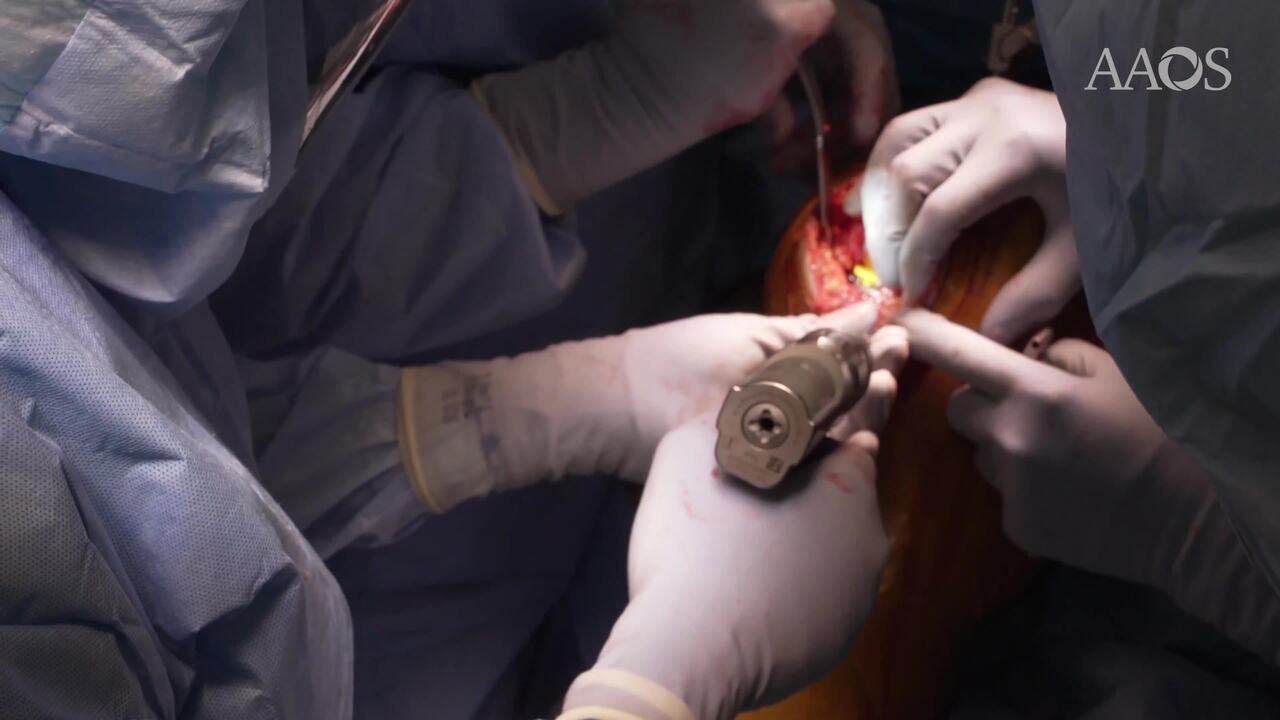
Surgical Technique: The video details the step-by-step surgical technique for a robotic-assisted lateral UKA. It highlights the use of the robotic system for precise bone resection and implant placement. The case features the implantation of a size 4 femoral component and a size 2 lateral tibial base plate with a polyethylene inset, all cemented in place. Post-operatively, the patient was allowed immediate weight-bearing as tolerated with physical therapy initiated soon after.
Discussion and Literature Review: A review of the literature demonstrates the advantages of robotic-assisted UKA. A systematic review by Sun et al. found that robotic assistance significantly lowered overall complication and revision rates compared to conventional techniques, attributing this to more precise implant placement and better post-operative alignment. Ruderman et al. and Heckmann et al. further support these findings, reporting higher implant survival rates (95% at 10 years and 100% at 5 years, respectively), improved patient satisfaction, and excellent functional outcomes with robotic-assisted UKA. Common complications such as prosthetic loosening and polyethylene bearing dislocation were significantly lower in the robotic-assisted group. While non-implant-specific complications were similar between groups, unique pin-site complications were noted with the robotic system.
Conclusion: Robotic-assisted lateral UKA is a safe and effective treatment option for isolated lateral compartment osteoarthritis. It offers enhanced surgical precision, leading to superior implant longevity, lower complication rates, and improved patient satisfaction compared to conventional manual techniques. This video demonstrates the surgical technique for this procedure, providing a valuable resource for surgeons considering the use of robotic assistance in their practice.